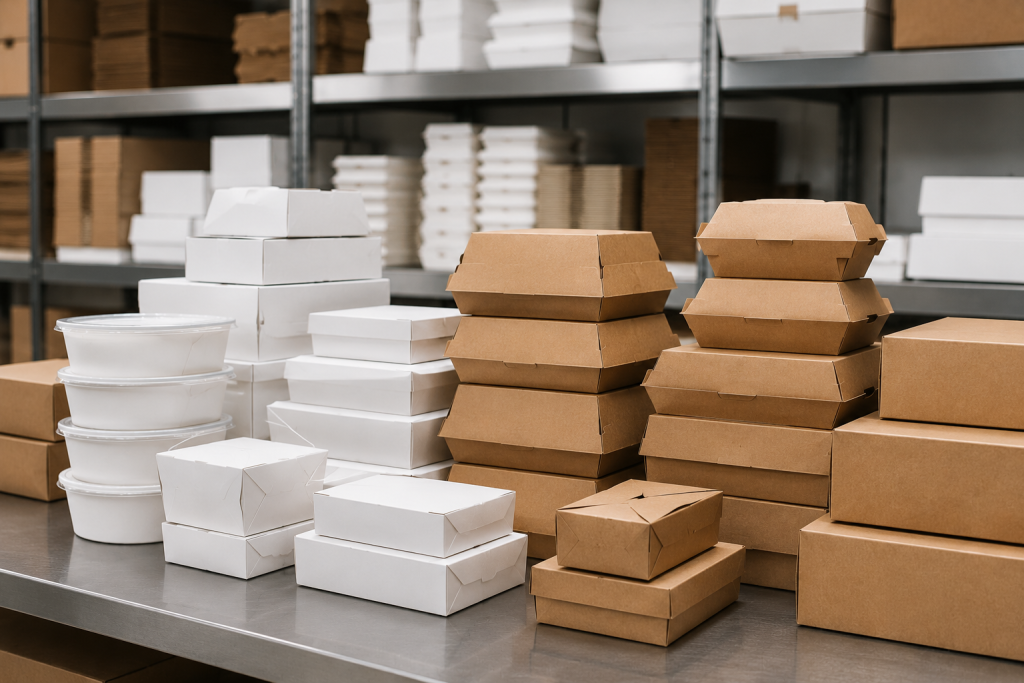
For restaurants, cafes, and food businesses, packaging is a recurring cost that adds up fast. A busy restaurant can go through thousands of boxes, bags, and containers every month. At retail prices, that’s a significant line item.
The solution most high-volume food businesses use is simple: buy wholesale.
Wholesale food packaging — purchasing in bulk directly from a manufacturer or authorized supplier — can cut packaging costs substantially while also giving you access to better customization options, consistent quality, and a reliable supply chain.
This guide explains how wholesale food packaging works, what to look for in a supplier, and how to calculate whether bulk ordering makes sense for your operation.
What Is Wholesale Food Packaging?
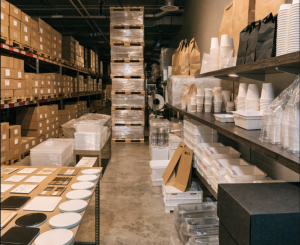
Wholesale food packaging refers to purchasing packaging materials in large quantities, typically at a per-unit price significantly lower than retail.
Instead of buying 50 boxes at a time from a local supply store, you order 500, 1,000, or 5,000 units directly from a manufacturer or specialized distributor. The price per unit drops, your supply is more consistent, and you often gain access to customization options that aren’t available at retail.
Wholesale buyers include:
- Restaurants and restaurant groups
- Ghost kitchens and delivery-only concepts
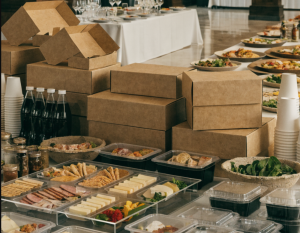
- Catering companies
- Bakeries and pastry shops
- Food manufacturers and processors
- Meal prep and meal kit businesses
Why Wholesale Packaging Makes Financial Sense
Lower Cost Per Unit
The math is straightforward. When you buy in volume, the cost per box, bag, or container decreases. For a restaurant buying 2,000 clamshells per month, even a $0.05 difference per unit adds up to $100/month — $1,200/year — from a single product.
[ADD: Example pricing table showing retail vs wholesale per-unit cost for common items]
Reduced Ordering Frequency
Buying in bulk means fewer purchase orders, fewer deliveries, and less administrative time managing your packaging inventory. For busy operations, this is as valuable as the cost savings.
Customization at Scale
Most manufacturers require minimum order quantities (MOQs) to make custom printing economically viable. Buying wholesale gets you to those minimums, unlocking branded packaging options that aren’t available for small orders.
Supply Chain Stability
Running out of packaging mid-service is a nightmare. Wholesale buying creates a buffer that keeps your operation running smoothly, even during supply chain disruptions or unexpected volume spikes.
What to Look for in a Wholesale Food Packaging Supplier
Not all suppliers are the same. When evaluating wholesale packaging partners, consider:
Product Range
A good supplier should offer the full range of packaging your operation needs — boxes, bags, cups, trays, wraps, lids — so you can consolidate purchasing with fewer vendors.
Minimum Order Quantities
MOQs vary significantly by supplier and product. Look for a partner whose minimums align with your actual volume, not one that forces you to over-order to get a good price.
Custom Printing Options
If brand visibility matters to your business (it should), confirm the supplier can handle custom printing, and ask about lead times, color matching, and proof processes.
Food Safety Compliance
All packaging that comes into contact with food must meet FDA food contact regulations. Confirm your supplier can provide documentation for their materials.
Lead Times and Reliability
Ask about typical turnaround from order to delivery, and what happens during peak season or supply shortages. A reliable supplier should be transparent about their capacity.
Customer Support
When you’re managing a busy food operation, you need a supplier who responds quickly, can handle rush orders when needed, and has a straightforward reorder process.
[ADD: Why CTP Boxes meets these criteria — link to about page or supplier credentials]
Manufacturer vs. Reseller: What’s the Difference?
When buying wholesale, you may encounter both manufacturers (who produce the packaging) and resellers (who buy from manufacturers and mark up for resale).
Buying from a manufacturer or authorized distributor:
- Lower prices (no middleman markup)
- Access to full product range
- Better customization options
- More consistent quality control
Buying from a reseller:
- May offer more flexible MOQs
- Faster shipping in some cases
- Wider multi-brand selection
For most restaurants with predictable, consistent packaging needs, working with a manufacturer or authorized distributor offers better long-term value.
How to Calculate Your Packaging Needs
Before placing a bulk order, calculate your actual monthly usage:
- Count your current inventory — how many units of each item do you currently have?
- Track consumption — how many units do you use per week on average?
- Calculate monthly usage — weekly usage × 4.3
- Add a buffer — most operations keep 4-6 weeks of inventory on hand
- Determine your order quantity — monthly usage × number of months you want to stock
Example:
- A restaurant uses 400 clamshell boxes per week
- Monthly usage: 400 × 4.3 = 1,720 units
- With a 6-week buffer: ~2,580 units
- A quarterly order: ~5,160 units
At wholesale pricing, ordering 5,000+ units in a single order typically unlocks the best per-unit rates.
Custom Branding at Wholesale Scale
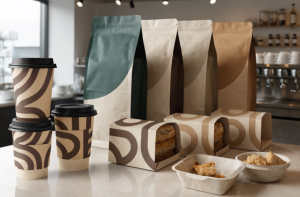
Once you’re buying at volume, custom branding becomes accessible and cost-effective. Branded packaging at scale typically costs only slightly more per unit than unbranded — and delivers significant marketing value in return.
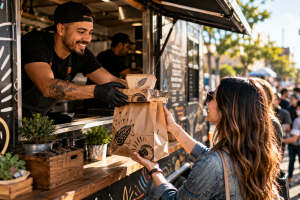
Every branded box that leaves your kitchen:
- Reinforces your brand to the customer
- Travels to wherever they eat (office, home, event)
- Can be photographed and shared on social media
- Communicates professionalism and quality
Custom options available through CTP Boxes include:
- Logo and brand name printing
- Full-color or single-color options
- Custom sizes for unique products
- Eco-friendly material options with branding
[ADD: Branded packaging examples from CTP Boxes catalog]
Industries That Benefit Most from Wholesale Packaging
- Restaurant groups and chains — consistent brand across multiple locations
- Ghost kitchens — packaging is the primary brand touchpoint for delivery
- Catering companies — high-volume events require reliable supply
- Bakeries — consistent, branded boxes for retail and wholesale clients
- Meal prep businesses — weekly recurring orders with predictable volume
- Food manufacturers — bulk quantities for production line use
Getting Started with Wholesale Food Packaging
- Audit your current packaging usage — know your monthly numbers before you talk to a supplier
- Define your requirements — sizes, materials, any custom printing needs
- Request samples — always test before committing to a large order
- Get a quote — compare cost per unit at different volume tiers
- Place your first order — start with a quantity that covers 2-3 months
- Set up a reorder schedule — most suppliers offer recurring orders or alerts
Wholesale food packaging isn’t just for large restaurant chains. Any food business with consistent, predictable packaging needs can benefit from buying in volume — whether you’re a single-location restaurant, a growing catering company, or a meal prep startup.
The savings are real. The supply chain benefits are real. And the branding opportunities that come with bulk custom printing can have a meaningful impact on how customers perceive your business.